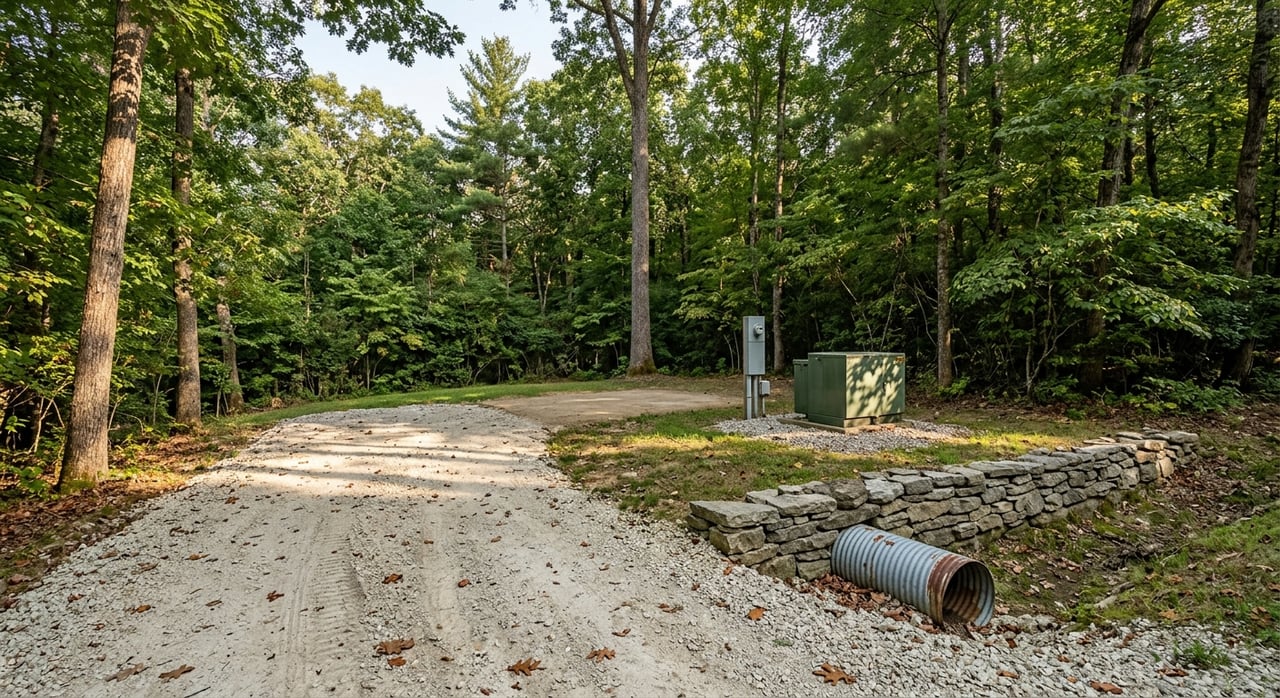
Buying land can feel simple at first. You find a parcel with the right price and enough space, and it is easy to imagine building right away. In Barboursville, though, raw land often comes with questions about zoning, access, utilities, flood risk, and approvals. If you understand those issues before you make an offer, you can avoid expensive surprises and make a more confident decision. Let’s dive in.
Start With Local Rules
One of the first things to confirm is whether the land falls inside the Village of Barboursville’s jurisdiction. West Virginia law allows municipalities and counties to adopt subdivision, land-development, and zoning rules, and Barboursville has its own codified ordinances and Planning and Zoning Code.
That matters because the rules are not one-size-fits-all. Barboursville’s code addresses different property uses separately, including mobile homes, multifamily dwellings, townhouses, and other special uses. If you plan to build a home, place a manufactured home, or explore a small investment property, you should confirm the intended use before writing an offer.
The Village also requires building plan approval for all new structures in the Village. That means buying the land is only one step. You also need to know whether your plans match the local approval path.
Buildability Depends on Access
A parcel may look buildable on paper, but access can change everything. If the property needs a new driveway connection to a state highway, the West Virginia Division of Highways requires a driveway permit from the district engineer for the county.
Just as important, a driveway permit is only one layer of approval. The Division of Highways makes clear that its permit does not replace local zoning or building permits. In practical terms, you need to look at road access and local approvals together, not separately.
Before any digging begins, WV 811 requires a locate request at least two business days and no more than 10 working days before excavation. That applies to work like driveways, foundations, septic installation, water lines, electric trenches, and similar site work. Even if the land feels rural, buried utilities may still be present.
A Survey Can Protect You Early
On raw land, a survey is often one of the smartest early steps. The West Virginia Society of Professional Surveyors recommends hiring a surveyor when the land is not clearly defined by a plat or legal description, before building a house or fence, and before buying title insurance or flood insurance.
A survey can help identify corners, mark property lines, locate wells, and help determine flood zones. That is especially useful when the lot lines are unclear or when what you see on the ground does not perfectly match the legal description.
Cabell County’s Assessor also provides GIS and tax maps online, which can help you verify parcel information early in your research. Those tools are helpful, but they are not a substitute for a professional survey when boundaries or improvements need to be confirmed.
Utilities Often Shape the Real Budget
One of the biggest mistakes land buyers make is focusing only on the purchase price. In many cases, the real budget is shaped by what it takes to get water, sewer, power, and other services to the site.
The Village of Barboursville lists the main utility providers buyers often need to check, including WV American Water, Appalachian Power, Mountaineer Gas, Frontier, and sewer contacts. If the parcel can connect to the Village wastewater system, the Village states that sanitary-board approval is required before connection.
There is also a specific cost to keep in mind. The current residential sewer tap fee is $1,000 or the actual connection cost, whichever is greater. If you are comparing lots, that type of fee can make one parcel much more expensive than it first appears.
If Public Sewer Is Not Available
If the land is not served by public sewer, you will likely need an on-site sewage system. In Cabell County, the Cabell-Huntington Health Department says the process starts with a certified installer, a percolation test, a site evaluation, and an application to the health department.
A sanitarian reviews the site, may issue a construction permit if the site qualifies, and then performs a final inspection after installation. This process can affect both cost and timeline, so it is best to learn those requirements before closing.
If You Need a Private Well
For private wells, the Cabell-Huntington Health Department says the owner must get a permit before drilling, modifying, or abandoning a well. The well must also be drilled by a licensed well driller.
The department notes that there is no fee for inspection services in Cabell County, although lab charges apply for water samples. That is helpful to know when building out your land-buying budget.
Building Usually Takes More Than One Approval
If you plan to build in the Village of Barboursville, expect more than one approval step. The Village building department says plan approval is required for all new structures in the Village.
It also requires plans to be stamped and sealed by a West Virginia architect. Applicants must submit two stamped copies and one digital set, and the Village asks for about two weeks to process a plan review application.
The Village’s building-code page also lists the adopted code package, including residential, plumbing, mechanical, energy, fire, and electrical standards. If you are pricing a custom home, cabin, or other project, these requirements can affect design choices, contractor coordination, and overall timing.
Alternative Housing Needs Extra Review
Barboursville’s code has a separate article for mobile homes and separate articles for multifamily dwellings and townhouses. That does not mean these uses are impossible. It means the approval path may differ from a standard single-family build.
If you are considering a manufactured home, modular home, or a small rental project, confirm the allowed use before you close. That simple step can save you from buying land that does not fit your actual plan.
Check Soil and Flood Risk Before You Commit
A pretty parcel is not always an easy building site. WVU Extension recommends a soil and site review before buying land to build on, including a look at flood hazard, septic suitability, slope, erosion, water table depth, bedrock depth, runoff, and other conditions.
These factors can affect whether the site is practical and how much site prep may cost. A lot that seems affordable at first can become far more expensive if you need added drainage work, major grading, or septic solutions for difficult soil.
WVU Extension also advises buyers to study soil maps, talk with nearby residents, and get help from NRCS or WVU Extension before making a final decision. If septic is needed, the county health department sanitarian must conduct a percolation test and issue a permit before construction begins.
Flood Maps Matter
Flood risk should be checked separately from your general impression of the land. FEMA states that the Flood Map Service Center is the official public source for flood-hazard information, and it notes that every property has some flood risk.
For properties in high-risk A or V zones, federally backed mortgages generally require flood insurance. Even if the land appears dry today, it is wise to check the flood map before closing and again if your project timeline is long.
Title and Mineral Rights Need Attention
With land, what you are buying is not always as simple as the surface you can see. West Virginia law states that when mineral rights have been severed from the surface, possession of the surface is not adverse to the mineral owner.
That makes title review especially important. You will want to confirm exactly what the deed conveys and whether there are mineral reservations, easements, or other title restrictions that could affect your plans.
This is one reason land purchases deserve a careful review process. It is not just about where the lines are. It is also about what legal rights come with the property.
A Smart Due Diligence Order
If you are trying to keep the process organized, it helps to follow a practical order. In Barboursville, a smart path is to confirm intended use and jurisdiction first, then review access, utilities, flood risk, soil conditions, survey needs, and title details before moving into final building plans and permit applications.
A simple checklist can help:
- Confirm whether the parcel is inside the Village of Barboursville jurisdiction
- Verify the intended use under local code
- Check whether driveway approval is needed
- Confirm public water and sewer availability
- Review well and septic requirements if utilities are not available
- Check flood maps and site conditions
- Order a survey and title review
- Prepare building plans and permit applications
This sequence can help you spot problems early, when you still have room to negotiate, adjust, or walk away.
Why Guidance Matters With Land
Land purchases can be rewarding, but they usually involve more moving parts than buyers expect. Access, utility connections, soil conditions, flood zones, surveys, and permit requirements all shape whether a parcel truly fits your goals.
If you are considering land in Barboursville, it helps to work with someone who will slow the process down in the right places, ask practical questions, and help you think through the next step before you are committed. If you want a steady, local guide as you explore your options, Jan Ramey is here to help.
FAQs
What should you check first before buying land in Barboursville, WV?
- Start by confirming the parcel’s jurisdiction and intended use under local rules, especially whether it falls inside the Village of Barboursville and what type of structure or use is allowed there.
Do you need a survey before buying land in Barboursville, WV?
- A survey is strongly advisable on raw land, especially when boundaries are unclear, before building, and before relying on existing fence lines, title insurance, or flood insurance decisions.
Can you build immediately after buying land in Barboursville, WV?
- Usually not. You may need to confirm zoning or use, road access, utility availability, flood risk, soil conditions, and building plan approvals before construction can begin.
What if the Barboursville, WV land does not have public sewer?
- You may need an on-site sewage system, which starts with a certified installer, a percolation test, a site evaluation, and health department review and permitting in Cabell County.
How long does plan review take for new construction in Barboursville, WV?
- The Village says plan review takes about two weeks, and separate timelines may also apply for utility setup, driveway approvals, and excavation notices through WV 811.
What extra costs should you budget for when buying land in Barboursville, WV?
- Common added costs include driveway access, drainage work, utility tie-ins, sewer tap fees, well or septic installation, survey work, and site preparation based on soil or slope conditions.